Best technology is the one that simply works. Without demanding attention
Extraordinary? Groundbreaking? Fundamental? Inspinia Technology, a company with a significant Czech footprint, has had a year in which it can boast not only a rapidly growing number of references for its SkyThings platform, but also the IoT Breakthrough Award. This is a good reason to ask CEO Koray Duran, where the company wants to go this year.
„Our cooperation with ELKO EP and the Holešov production base is a key pillar of Inspinia’s strategy. Beyond ensuring European manufacturing quality and supply chain reliability, our synergy is strengthening every year through deeper vertical integration of our products. This close alignment between R&D, production, and system architecture allows us to move faster, optimize performance across the full product stack, and consistently deliver high-quality, scalable solutions to the market,“ says Koray Duran.
Looking back at 2025, what would you identify as the most significant milestone for Inspinia Technology in terms of market growth and technological innovation?
2025 was a defining year for Inspinia. Our most significant milestone was the scaling of SkyPlatform from a powerful configurator into a true cloud-based operational backbone for smart buildings and homes. From a market perspective, this enabled us to expand more decisively across Europe and MENA, particularly in hospitality and multi-residential projects. Technologically, we proved that professional-grade automation can be cloud-native, secure, and scalable without sacrificing reliability — that shift fundamentally changed how partners deploy and manage our ecosystem.
Inspinia has recently garnered several industry awards (such as IoT Breaktrhough Award.). How do these accolades influence your product development roadmap and the way you approach design?
Awards are not the goal, but they are a strong validation. Recognition like the IoT Breakthrough Award reinforces our belief that clarity, interoperability, and real-world usability matter more than complexity for its own sake. These accolades encourage us to push further in simplifying commissioning, improving UI/UX, and accelerating innovation cycles — while staying laser-focused on solving actual problems faced by integrators, facility managers, and end users.
Which specific project or reference from the past year are you most proud of, and why does it best represent Inspinia's core values
What makes me most proud is not a single flagship project, but a set of mid- to large-scale smart building deployments where SkyPlatform enabled remote commissioning, monitoring, and lifecycle management across multiple sites. These projects best represent our core values: engineering discipline, openness, and long-term reliability. They show that INSPINIA is not just about devices, but about delivering operational confidence at scale.
The SkyPlatform has been a game-changer for your ecosystem. How has the platform evolved over the last 12 months to meet the increasing demands for remote management and security?
Over the last year, SkyPlatform evolved in three key areas: security, scalability, and control depth. We strengthened role-based access, encrypted communication layers, and audit logging, while also expanding remote diagnostics, firmware management, and rule-based automation. This allows system integrators and building operators to manage complex installations securely — without being physically on site.
IoT Enterprise App Development Platform Of The Year.
Connectivity is the backbone of IoT. How is Inspinia addressing the integration of Matter and Thread protocols within SkyPlatform to ensure future-proof interoperability?
We see Matter and Thread not as replacements, but as complementary layers in a heterogeneous ecosystem. Our approach is protocol-agnostic at the platform level. SkyPlatform is being designed to abstract connectivity, allowing Matter and Thread devices to coexist with KNX, iNELS, Modbus, BACnet, and IP-based systems. This ensures future-proof interoperability while protecting existing investments — which is critical for professional projects.
Cloud-to-cloud integration is becoming standard. Can you share how SkyPlatform is expanding its API capabilities for third-party service providers?
Absolutely. In 2025, we significantly expanded our open API framework, enabling secure cloud-to-cloud integrations with energy platforms, analytics tools, and third-party services. Our focus is on structured, well-documented APIs that allow partners to build value-added services on top of Inspinia — from energy optimization to predictive maintenance — without vendor lock-in.
The smart building market is increasingly crowded. What is your unique value proposition that keeps Inspinia ahead of both traditional automation firms and new tech giants?
Our strength lies in bridging two worlds. We combine the robustness of traditional building automation with the agility of modern IoT and cloud platforms. Unlike tech giants, we deeply understand professional installation environments. Unlike legacy players, we move fast and design for cloud-first operation. This balance allows us to stay relevant, scalable, and trusted.
We see a shift towards "Energy Management as a Service." How are your hardware and software solutions helping end-users mitigate rising energy costs in real-time?
Rising energy costs are pushing both residential and commercial users to focus on better control rather than added complexity. Inspinia supports this shift by enabling efficient operation of building systems through reliable hardware and a centralized software platform.
Our solutions allow users to manage VRF, lighting, and shading more consistently through scheduling, zoning, and remote access. By ensuring systems operate only when and where they are needed, end users can reduce unnecessary energy usage and gain better control over operating costs.
Inspinia’s approach is to provide a stable, interoperable foundation that helps users take practical steps toward energy efficiency today, while remaining flexible enough to support more advanced energy management services in the future.
Inspinia Technology
How do you balance the complexity of professional-grade KNX systems with the demand for a simplified, "plug-and-play" user experience?
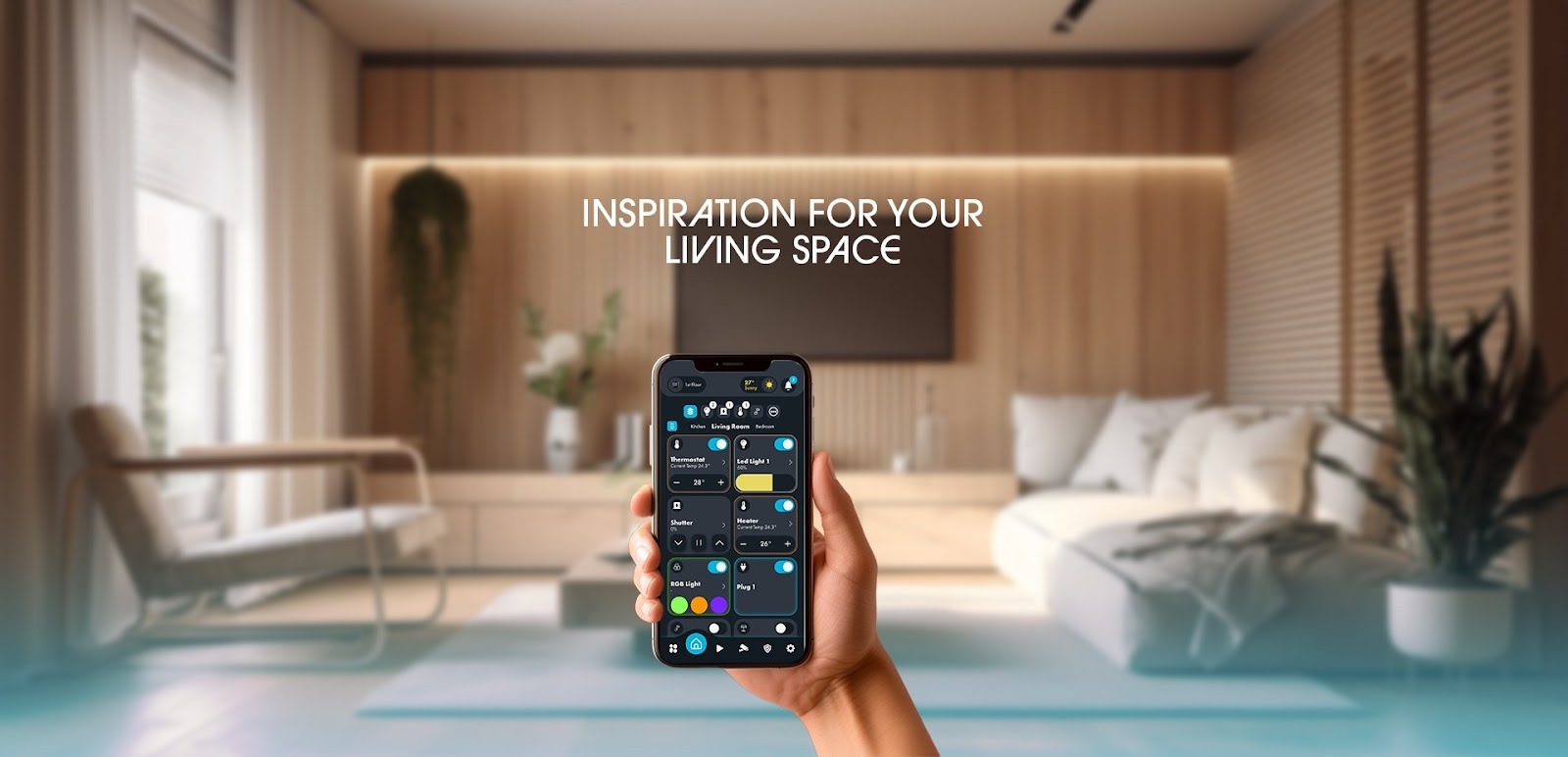
The complexity should stay behind the scenes. Our philosophy is to keep engineering power for professionals, while delivering intuitive experiences for end users. Preconfigured templates, visual logic, and cloud-based tools allow integrators to deploy advanced KNX systems faster — while users interact with a clean, simple interface that feels effortless.
As we enter 2026, what are the primary strategic pillars for Inspinia Technology for the next 12 to 24 months?
Our four strategic pillars are clear: Platform expansion – further evolving SkyPlatform into a lifecycle management hub. Interoperability – deeper multi-protocol and cloud integrations. Energy intelligence – smarter, data-driven control strategies. Global partner growth – empowering integrators with tools, training, and scalability. These pillars guide every decision we make.
Artificial Intelligence is moving from a buzzword to a functional tool. How do you envision AI enhancing the predictive maintenance and automation logic within the Inspinia ecosystem this year?
AI taking autonomous decisions in building systems is still at an early stage, so we are approaching it carefully. For now, our focus is on AI-powered reporting, anomaly detection, and pattern analysis that support better human decision-making rather than replacing it.
This year, we are working on AI features that add value quietly in the background — and we may have a few surprises, especially around diagnostics and predictive insights. These steps will lay the groundwork for more advanced automation in the future.
If you were to describe the "Smart Home of 2026" in three words through the lens of Inspinia, what would they be?
Connected. Intelligent. Invisible. Because the best technology is the one that simply works — without demanding attention.
.jpg)